The Premier League's East Asian Recruitment Gap
DATA ANALYSIS · PLAYER RECRUITMENT
As of the start of the 2026/27 Premier League season, just 11 Asian players feature across the league’s 20 teams, accounting for just 2.2% of all players. But why is Asian representation in the Premier League so low?
While not all Asian nations have established themselves as footballing powers, Japan and South Korea have become prominent forces on the international stage at both senior and youth level in recent times. Both the Japanese and South Korean Football Associations have invested heavily in developing their domestic footballing infrastructure and youth development systems, with standout talents like Kaoru Mitoma and Son Heung-Min becoming Premier League stars. Yet, despite the talent emerging from both countries, Japanese and South Korean player remain underrepresented in the Premier League.
This analysis investigates whether Japanese and South Korean players are underrepresented in Premier League recruitment and whether potential undervalued talent could present opportunities for clubs. By examining historical transfer patterns and recruitment from the Japanese and Korean domestic leagues, the project also aims to identify emerging talents who could become attractive prospects Premier League clubs.
Why Japan and South Korea?
While this analysis originated from the underrepresentation of Asia players in the Premier League, I did not consider it necessary to examine every Asian nation equally. Football's popularity, level of investment and international success vary considerably across the continent, meaning it is understandable why some nations are underrepresented in the Premier League. In some countries, other sports have traditionally held greater cultural significance, while others have focused investment on attracting established foreign players to strengthen their domestic competitions. I therefore chose to focus on nations with an established international pedigree and competitive domestic leagues, where there was a stronger basis for investigating whether talent might be overlooked by Premier League clubs.
At the 2026 World Cup, Japan were the only Asian nation to progress to the knockout stages. The have consistently been a feature of the World Cup knockout stages since 2018, famously topping their group in 2022 after defeating both Germany and Spain. Japan have also enjoyed continental success, winning the Asia Cup in 2011 and reaching the final in 2019. Their success extends to youth level, with the U-17 side winning two of the last three U-17 Asian Cups in 2023 and 2026. These achievements suggest a pathway for emerging talent, which is reflected in Japan's position as the highest-ranked Asian nation in the FIFA world rankings, at 17th.
Iran (23rd), South Korea (32nd) and Saudi Arabia (55th) are the next highest Asian nations in the FIFA rankings, but all failed to make it past the group stages at the World Cup. Despite a disappointing tournament this year, South Korea have demonstrated their ability to compete against some of the world’s strongest teams. They reached the Round of 16 in Qatar in 2022 and famously defeated reigning world champions Germany 2-0 in the 2018 group stage. They have also shown promise at youth level with their U-20 squad finishing as runners-up at the 2019 U-20 World Cup and fourth in 2023. These performances provide evidence of South Korea’s ability to develop players capable of competing on the international stage.
While Japan and South Korea have established themselves as prominent forces on the international stage, it is also important to consider the strength of their domestic leagues and their role in developing talent. According to Opta's league power rankings, Japan's J1 League is the highest-ranked Asian domestic league, sitting 29th globally, while South Korea's K League 1 ranks 51st. However, the Saudi Pro League sits between the two in 38th place. Given Saudi Arabia's international standing and the comparatively high ranking of its domestic league, it is worth considering whether it should also be included in this analysis.
A key factor behind the growth in the quality of the Saudi Pro League has arguably been its recruitment of established foreign players, with high-profile names such as Cristiano Ronaldo, Neymar and Karim Benzema moving to the league in recent years. Over the last decade, the 18 clubs currently competing in the Saudi Pro League have accumulated a combined net transfer spend of €2.77 billion. By comparison, the 20 current J1 League clubs recorded a combined net spend of just €22.9 million over the same period, while the 12 current K League 1 clubs generated a net transfer profit of €35.6 million.
This difference is also reflected in average player market values: €2.53 million in the Saudi Pro League, compared with €441,000 in the J1 League and €226,000 in the K League 1. However, the Saudi Pro League also has a substantially higher proportion of foreign players, at 38.2%, compared with 15.7% in Japan and 15.6% in South Korea. Taken together, these figures suggest that the Saudi Pro League's overall quality is influenced considerably by investment in overseas talent, rather than solely reflecting the development of domestic players. As this analysis aims to identify potentially undervalued talent emerging from domestic leagues, the Saudi Pro League is therefore less suitable for the investigation than the J1 League and K League 1.
Japan and South Korea therefore represent suitable candidates for this investigation. Both nations have established footballing cultures, competitive domestic leagues and a proven ability to develop players capable of performing on the international stage. It is therefore unsurprising that Japanese and South Korean players account for 10 of the 11 Asian players currently in the Premier League. However, this remains a small number given the talent these nations have demonstrated on the international stage. This raises an important question: if these countries consistently produce players capable of competing at the highest level, why are more not making the move to English football?
The remainder of this analysis will examine historical recruitment patterns of Japanese and South Korean players to assess whether they are underrepresented or potentially undervalued by Premier League clubs, before identifying emerging talents from the J1 League and K League 1 who could represent future recruitment opportunities.
Premier League Transfers by Nationality
To begin to investigate this question, I collected data on players who had signed for a Premier League club since the summer 2016 transfer window, up until present in the summer 2026 window. To my surprise, the current lack of Asian players in the Premier League is not an outlier, but a common pattern over this time period.
Over this period, there were a total of 1,913 Premier League signings, with more than two thirds involving European nationals, as illustrated in Figure 2. African and South American players accounted for the next largest proportions of arrivals, representing 13.1% and 12.3% respectively. In contrast, with just 39 signings, Asian players accounted for only 2.04% of all transfers. This was comparable to the representation of North American players (3.03%) and Oceanic players (1.10%).
This is an interesting finding given the popularity of football across much of Asia. Compared with some other regions, several Asian nations have demonstrated considerable commitment to developing the sport, investing in their footballing culture and grassroots development. For example, in Australia, football ranks behind Australian rules football, rugby and cricket in terms of popularity, with the Australian Sports Commission (ASC) reportedly investing $4.21 million annually into the sport. In Japan, while baseball remains hugely popular, football is widely established as the country's second most popular sport. The Japan Football Association (JFA) has also demonstrated significant financial commitment to the game's development, running a reported yearly deficit of $19 million due to aggressive investment into growth and infrastructure at all levels of the game. Similarly, the Korean Football Association (KFA) reportedly spends up to $37 million annually on youth development, grassroots training and school-level infrastructure, in an attempt to develop the next generation of players.
One might expect these differences in footballing culture and investment to be reflected in the quality of players produced by these nations. To some extent, this is evident in the international rankings, with Japan currently occupying 17th place in the FIFA world rankings, nine positions above Australia in 26th. However, Australia also ranks above South Korea, currently placed 32nd. This is despite South Korea having consistently ranked higher than Australia since June 2023, only recently dropping in the rankings due to their disappointing 2026 World Cup campaign.
Despite these differences in footballing development and international standing, the Premier League transfer figures tell a somewhat different story. Since summer 2016, there have been 13 Australian signings compared with just seven South Korean players. Japan fares slightly better, with 19 signings over the same period. Although Japan accounts for the largest share of Asian arrivals, these figures remain relatively low given the country's international standing and investment in football development. This raises the possibility that Premier League recruitment does not fully reflect the talent emerging from Japan and South Korea.
The findings from Figure 1 are also particularly interesting when considering the transfer fees involved. Zion Suzuki's move to Aston Villa earlier this summer for €30 million established a new Premier League transfer record for a Japanese player. However, the average fee paid for Japanese players remains just €6.4 million, only slightly higher than the €4.0 million average for South Korean players. By comparison, players from countries with considerably less established international pedigrees, such as Paraguay, command an average fee of almost twice that of Japanese players (€12.5 million). Even Albania, whose national team has never qualified for a World Cup, records a higher average transfer fee than South Korea, at €5.5 million.
Considering the international success and footballing infrastructure Japan and South Korea have developed, these figures are somewhat surprising. Although transfer fees are influenced by numerous factors, including player age, contract length, position and selling club, the disparity raises questions about how Premier League clubs value talent emerging from these countries. When considered alongside their relatively low representation in the Premier League, the transfer fees provide further evidence of a potential undervaluation of Japanese and South Korean players within the English market.
Premier League Transfers by Selling League
Another interesting piece of evidence for the underrepresentation of Japanese and Korean players in the Premier League is in the squads these two nations took to the 2026 World Cup. Of South Korea’s 26 man squad they took to North America, just seven players played their club football in their home country. While small, this was more than the Japanese squad who only had three players playing in the J1 League. This suggests that the elite players of each nation tend move abroad to chase higher levels of football. Yet, of the 52 players across these two squads just four of them were Premier League players at the time of the tournament (Hwang Hee-Chan, Wataru Endo, Daichi Kamada and Ao Tanaka).
If the most highly regarded Japanese and South Korean players are not making the move directly to the Premier League, which leagues are attracting them instead? Examining transfers out of the J1 League since summer 2016 reveals that the Belgian Pro League has been the most prominent destination for Japanese players, accounting for 53 transfers. Liga Portugal follows with 18, while the Eredivisie accounts for a further 13. For South Korean exports from the K League 1, Liga Portugal represents the most common European destination, with 10 transfers, followed by the Bundesliga with six.
Figure 4 highlights another interesting trend: since summer 2016, just six Japanese players have moved directly from the J1 League to the Premier League. Of the 19 Japanese players to have signed for Premier League clubs during this period, this represents just 32% of arrivals. These six players commanded an average transfer fee of €2.5 million, compared with €8.22 million for the remaining 13 players who arrived from other leagues. This suggests that Premier League clubs have been willing to pay considerably higher fees for Japanese players who have already established themselves elsewhere in Europe.
Newcastle's signing of Yoshinori Muto in 2018 provides an interesting example. Mainz had originally signed him from FC Tokyo for just €2.8 million before Newcastle paid €10.7 million for his services a few years later. Of course, Muto may have developed considerably during his time in Germany, becoming a more attractive proposition for Newcastle. Nevertheless, the difference in fees raises an interesting question: could Premier League clubs identify and recruit similar talent directly from Japan at a considerably lower cost, rather than paying a premium once players have established themselves in European football?
A similar pattern emerges for South Korean players, although there is an even split between the three signings arriving directly from the K League 1 and the three recruited from elsewhere. Those signed directly from South Korea commanded an average fee of just €2.4 million, compared with €5.56 million for players arriving from other leagues. However, this latter figure is heavily influenced by Hwang Hee-chan's €17 million move to Wolves in 2022. This suggests that, as with Japanese players, Premier League clubs have generally paid higher fees for South Korean players who have developed their careers outside their domestic league.
Figure 6 further highlights the potential gap in player recruitment directly from Japan and South Korea. Both the J1 League and K League 1 sit below the trend line, suggesting that, relative to their Opta league strength rankings, fewer players have moved directly from these leagues to the Premier League than might be expected.
However, this discrepancy may not necessarily reflect a conscious reluctance among Premier League clubs to recruit from these leagues. Instead, it could point towards a broader issue of accessibility within the global player recruitment market. Of the 21 leagues above the trend line, only 14% are located outside Europe, while 50% of leagues below the trend line are non-European. This suggests a wider pattern in which European leagues are more heavily represented among those supplying players to the Premier League than their league strength alone might predict.
One possible explanation is that Premier League clubs have greater familiarity with European football, supported by established scouting networks, professional contacts and more accessible performance data. In contrast, identifying talent in Japan and South Korea may require greater investment in scouting infrastructure, travel and the development of local networks. These additional barriers could reduce the likelihood of players being identified and recruited directly from these leagues, even where their quality warrants greater attention.
Given the financial resources available to Premier League clubs, it would be difficult to argue that the cost of scouting alone is necessarily prohibitive. Other factors, including recruitment preferences, language and cultural barriers, work permit requirements and the perceived risks of adapting to English football, may also influence transfer decisions. Therefore, this gap in recruitment directly from Japan and Korean may not be explained solely by the perceived quality of those leagues, but could also reflect geographical and structural barriers to recruitment.
Emerging Talents
Now that we have explored some of the potential reasons why relatively few Japanese and South Korean players make the move to the Premier League, despite the quality of talent these nations have produced, I wanted to investigate whether there are emerging players in their domestic leagues who could represent attractive recruitment opportunities for English clubs.
To do this, I created a player database using data from the J1 League and K League 1, covering the 2025 seasons onwards. After grouping players by position and applying a minimum minutes-played threshold, I calculated percentile rankings across a range of performance metrics within each positional group. Using these results, I identified a selection of young players currently playing in Japan and South Korea who I believe have the potential to make the step up to the Premier League.
Alexandre Pisano | Goalkeeper | Nagoya Grampus
20 | Right Footed | €275,000
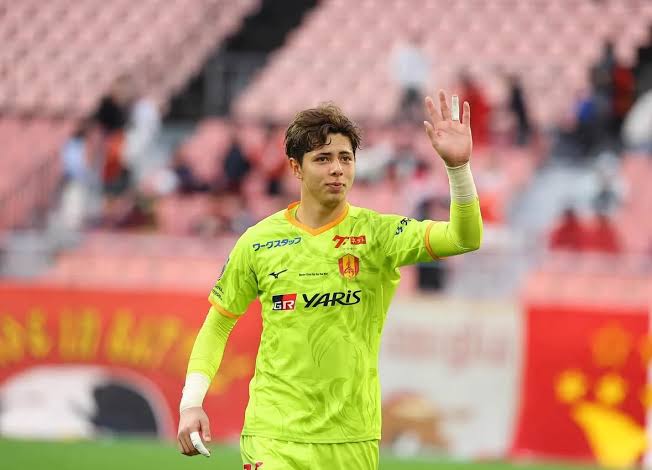
Alexandre Pisano is a modern-style goalkeeper, standing at 6ft 6in. A product of Nagoya Grampus' youth system, Pisano began the 2026/27 season as the club's first-choice goalkeeper, starting their opening six matches. However, following Nagoya's 3-1 defeat to Machida Zelvia in September, during which he was unfortunate to score an own goal, Pisano has since been relegated to the bench. He also shared goalkeeping responsibilities for Japan's U-23 side during their run to the final of the recent Asian Games.
Despite losing his place in the starting XI, I believe Pisano remains a very promising prospect. His physical stature allows him to command his penalty area, ranking in the 93rd percentile for punches per 90, while his anticipation and willingness to come off his line are reflected in his 91st-percentile ranking for successful run-outs per 90. However, what makes him particularly interesting from a recruitment perspective is his ability with the ball at his feet. Pisano ranks in at least the 93rd percentile across all available passing metrics, suggesting a level of distribution that could make him particularly well suited to English football. With goalkeepers increasingly expected to contribute to build-up play in the Premier League, I believe his technical ability could make him an attractive option for clubs looking to recruit a modern, ball-playing goalkeeper.
Shin Min-ha | Centre Back | Gangwon FC
21 | Right Footed | €600,000

Shin Min-Ha is an imposing left-sided centre-back playing for Gangwon FC, who currently boast the second-best defensive record in the K League 1. He has also been a regular starter for South Korea's U-23 side, featuring in their recent Asian Games success.
Min-Ha is an aggressive defender who is often willing to step out of the defensive line to engage opponents. This can occasionally leave him exposed or drawn out of position, although his athleticism allows him to recover effectively, having recorded a top speed of 35.2 km/h this season. He ranks in the 73rd percentile for both tackles won per 90 and ground duel win rate, suggesting he is particularly effective in one-on-one defensive situations. However, his aerial duel statistics are a notable weakness, with his win rate placing him in just the 5th percentile. On the ball, he is generally a reliable but relatively conservative passer, favouring shorter, safer options rather than attempting to break opposition lines. This may limit his appeal to some English clubs, particularly those looking for centre-backs capable of progressing possession.
Seo Myeong-kwan | Centre Back | Ulsan HD
23 | Right Footed | €350,000

Seo Myeong-kwan is another promising centre-back emerging from the K League 1. Like Shin Min-Ha, he is not particularly impressive in possession, but his defensive capabilities are where he really stands out. Playing on the right side of a back three for Ulsan HD, Seo's ability to read the game is reflected in his ranking in the 98th percentile for interceptions. His physical attributes are equally impressive, placing him in the 98th percentile for tackles won per 90 and the 93rd percentile for ground duel win rate. Although slightly older than some of the other prospects featured, at 23 years old, I believe his defensive awareness and physical capabilities could make him an interesting option for Premier League clubs, particularly those looking for an aggressive, defensively reliable centre-back.
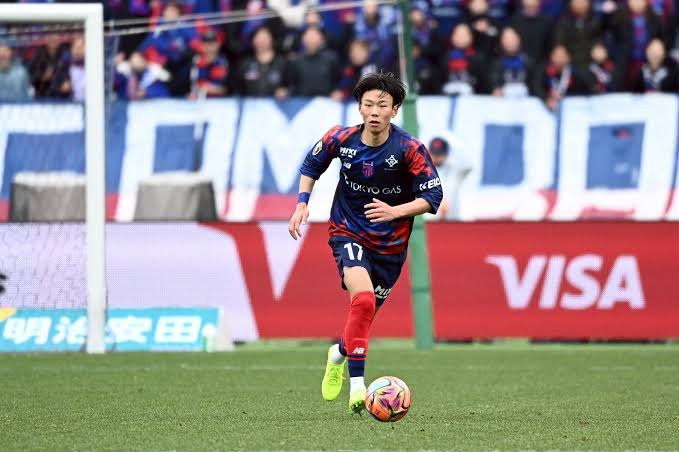
Hayato Inamura | Centre Back | FC Tokyo
24 | Left Footed | €450,000
Seo Myeong-kwan is another promising centre-back emerging from the K League 1. Like Shin Min-Ha, he is not particularly impressive in possession, but his defensive capabilities are where he really stands out. Playing on the right side of a back three for Ulsan HD, Seo's ability to read the game is reflected in his ranking in the 98th percentile for interceptions. His physical attributes are equally impressive, placing him in the 98th percentile for tackles won per 90 and the 93rd percentile for ground duel win rate. Although slightly older than some of the other prospects featured, at 23 years old, I believe his defensive awareness and physical capabilities could make him an interesting option for Premier League clubs, particularly those looking for an aggressive, defensively reliable centre-back.
Yotaro Nakajima | Centre Midfielder | Sanfrecce Hiroshima
20 | Right Footed | €800,000

Yotaro Nakajima has been regarded as a promising talent in Japanese football since becoming the youngest player to sign a professional contract with Sanfrecce Hiroshima at the age of 17 in 2023. Having joined the club's youth system at just eight years old, he has progressed through the ranks to become a regular feature in the first team. He was also an important figure for Japan's U-23 side during their recent run to the Asian Games final.
Nakajima is a highly technical, deep-lying playmaker capable of dictating the tempo of a game. His ability to progress possession is a particular strength, supported by excellent spatial awareness that allows him to find space and consistently offer himself as a passing option. While physicality may not be his strongest attribute, his defensive statistics are impressive, placing him in the 100th percentile for tackles per 90 and the 95th percentile for ball recoveries per 90. This suggests that, despite not being the most physically imposing midfielder, he can still contribute effectively out of possession.
Sanfrecce Hiroshima's links with German side FC Köln could potentially offer Nakajima an interesting route into European football. However, given his technical quality and ability to control the midfield, I am sure he will be on the radars of many Premier League clubs.
Son Jeong-beom | Centre Midfielder | FC Seoul
19 | Left Footed | €300,000

Son Jeong-beom is arguably one of the most exciting prospects currently playing in the K League 1. The 19-year-old has been an important figure in FC Seoul's 2026 campaign, featuring in 29 of their 31 matches so far, including 21 starts. His regular involvement at such a young age reflects his ability to contribute across different phases of play, combining the physical endurance to operate effectively in transition with the technical quality to influence possession. Perhaps his most impressive attribute, however, is his composure on the ball under pressure, a particularly rare trait in a player of his age.
Although Son has registered just two goals this season, his ability to arrive late in the penalty area and find promising shooting opportunities is reflected in his xG per 90, which ranks in the 92nd percentile. This suggests that he is getting into dangerous positions even if his goal return has yet to match that underlying output. However, his slender frame could present a challenge if he were to move to a more physically demanding league. He ranks in just the 4th percentile for aerial duel win rate, highlighting an area that may require improvement as he continues to develop. Nevertheless, I truly believe Son is the next big name in Korean football, and hopefully Premier League teams take a chance on him.
Yumeki Yokoyama | Left Winger | Cerezo Osaka
21 | Right Footed | €970,000
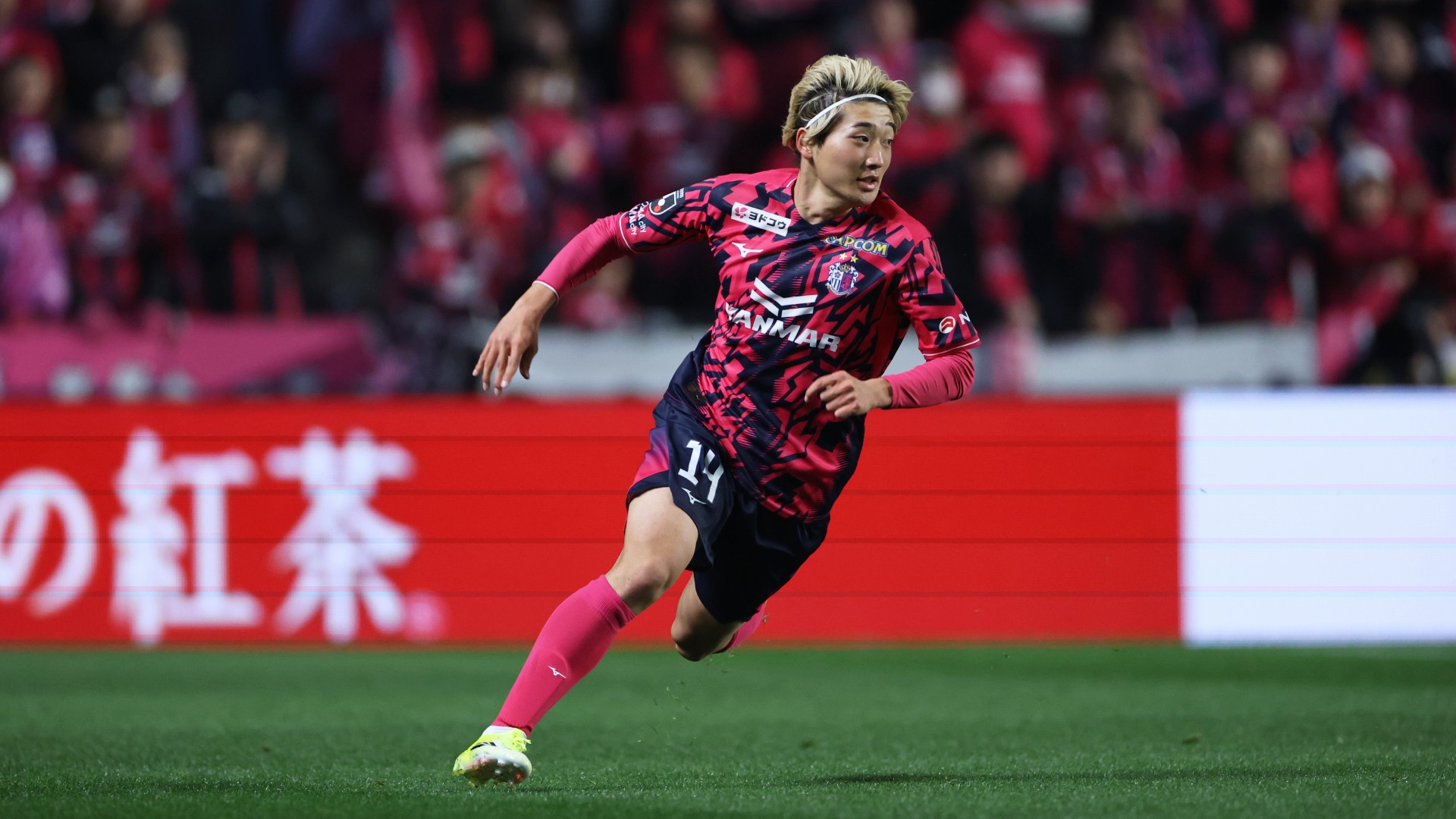
Yumeki Yokoyama is an exciting young winger who has shown considerable promise throughout 2026, both in the 100 Year Vision League and during the opening stages of the 2026/27 J1 League season. He has scored six goals for Cerezo Osaka across the 2026 campaign so far, while also featuring along side Yotaro Nakajima for Japan's U-23 side during their recent run to the Asian Games final.
Yokoyama is a direct, attack-minded winger who likes to play on the shoulder of his defender, looking to exploit space in behind the opposition's defensive line. He is equally dangerous when carrying the ball, using his pace and willingness to take on defenders to drive his team forward. This is reflected in his ranking in the 97th percentile for successful dribbles per 90, highlighting his ability to beat opponents in one-on-one situations. However, to take the next step in his development, he will need to become more consistent in his creative output and decision-making in the final third. Improving his ability to create chances for teammates, alongside his existing threat as a ball carrier, could help him develop into a more complete attacking option and attract interest from English clubs.
Shin Miidera | Left Winger | Yokohama F. Marinos
16 | Left Footed
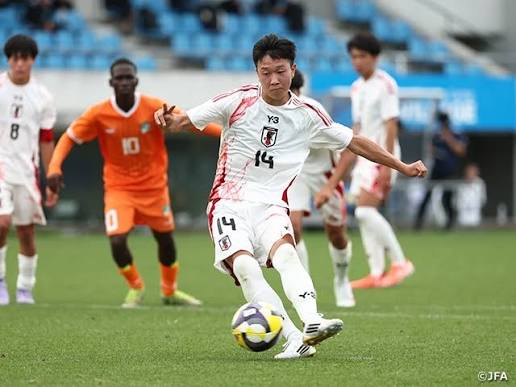
At just 16 years old, Shin Miidera is by far the youngest player featured in this analysis and potentially one of the most exciting prospects. Having progressed through Yokohama F. Marinos' youth system, Miidera made an immediate impression on the first team, earning a place in the starting XI for their opening match of the 2026/27 season and scoring with his very first touch.
Miidera is an exceptionally technical player whose ability on the ball allows him to operate both as a central attacking midfielder and out wide. However, he appears particularly dangerous as a winger, where his dribbling ability allows him to take on defenders and create opportunities in one-on-one situations. He ranks in the 96th percentile for dribbling success rate, highlighting his effectiveness when carrying the ball past opponents. While his current creative output remains limited, this is perhaps unsurprising for a player still adapting to senior football at such a young age. Inelegible to sign for a Premier League club until he turns 18, Miidera has time to gain valuable first team experience and build on his technical strengths before making the next step. By then, I believe his potential will attract significant interest from English clubs.
Harumi Minamino | Striker | Urawa Red Diamonds
22 | Striker | €450,000
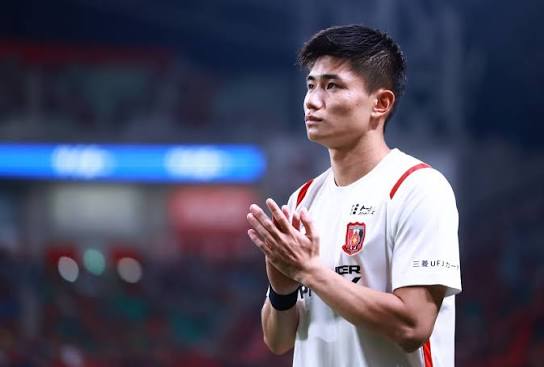
Following an impressive campaign in the 100 Year Vision League with Gamba Osaka, where he scored six goals in 17 appearances, Minamino made a summer move to Urawa Reds. He faced his former club on the opening day of the 2026/27 season and made an immediate impact, scoring within 20 minutes of coming onto the pitch.
Despite making six of his ten league appearances so far this season from the bench, Minamino has continued to influence games, already scoring four goals. His return of a goal every 97 minutes places him in the 99th percentile among the strikers in the dataset, highlighting his impressive scoring efficiency. He also recently scored an extra-time winner against Nagoya Grampus to send Urawa through to the next round of the J.League Cup.
In terms of his playing style, Minamino resembles a hybrid striker, often dropping into pockets of space to receive the ball on the half-turn before driving at opposing defenders. This ability to link midfield and attack makes him an interesting attacking option, although his decision-making and combination play can sometimes let him down, with possession occasionally being wasted in promising situations. He is also an aggressive presser, showing a willingness to put opposition defenders under pressure, although his defensive statistics suggest that this intensity does not always translate into effective defensive contributions.
Akito Suzuki | Striker | Sanfrecce Hiroshima
23 | Right Footed | €1.2 Million
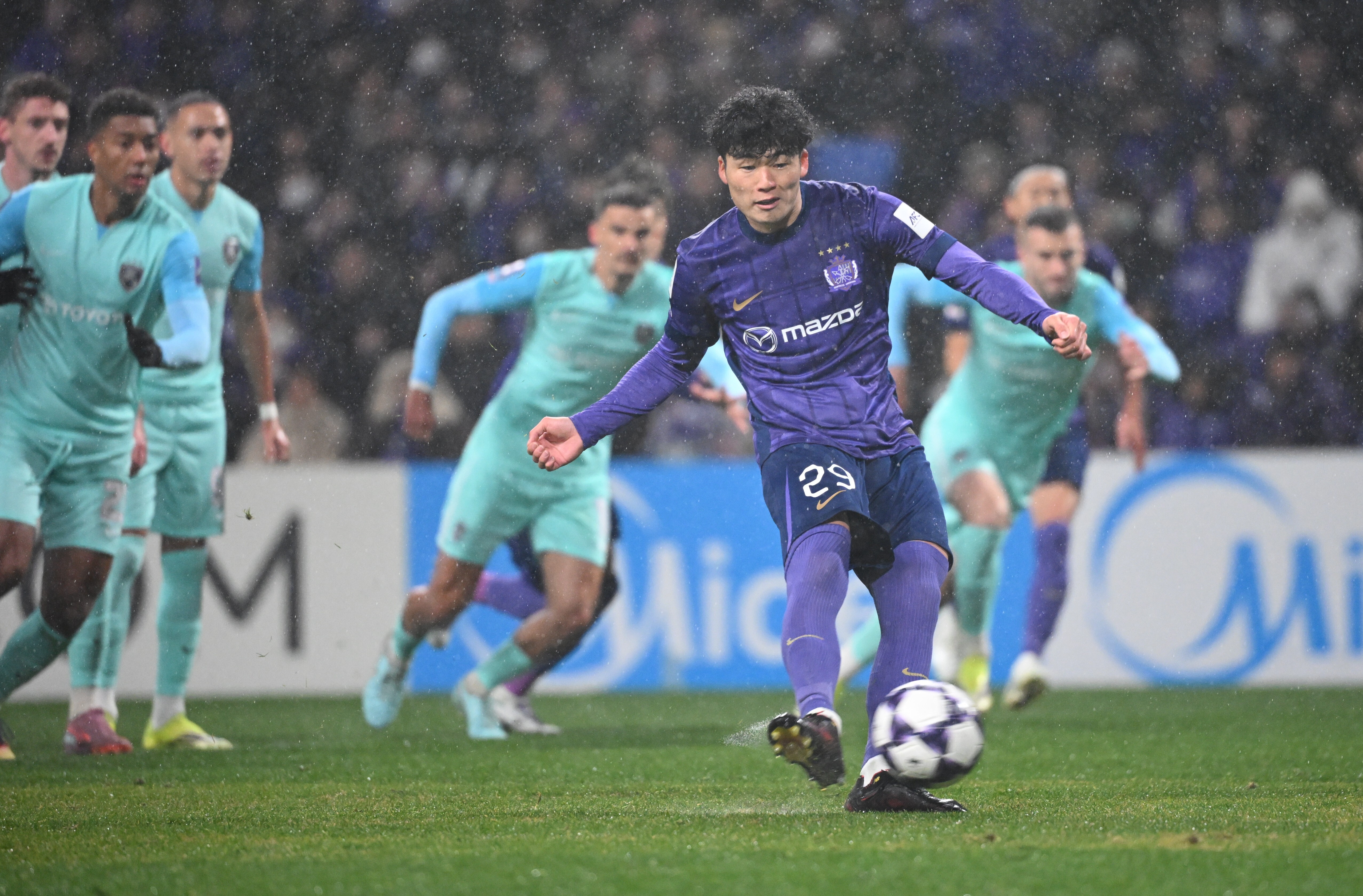
Akito Suzuki has been one of the standout performers in an impressive Sanfrecce Hiroshima side this season, recording nine goals and four assists in just 12 appearances. Operating as a left forward in a 3-4-3 system, Suzuki is an extremely versatile attacker. He can hold the width on the left flank, drop into central areas to operate as a number 10, or make runs into the penalty area to occupy the role of a traditional poacher.
Suzuki is a clinical finisher with either foot, having scored nine goals from just 5.68 expected goals (xG) this season. This overperformance highlights his ability to convert chances, while his goals-per-90 figure places him in the 89th percentile among strikers in the dataset. However, his contribution extends well beyond goalscoring. He is heavily involved in Sanfrecce's attacking play and demonstrates impressive creative ability, ranking in the 98th percentile for secondary assists and the 93rd percentile for direct assists. This combination of goalscoring threat, creativity and positional versatility makes him a particularly interesting attacking prospect.
Conclusion
Overall, I believe it is clear that the underrepresentation of Japanese and South Korean players in the Premier League is more complex than English clubs simply overlooking the quality these nations have to offer. Both countries have invested heavily in footballing infrastructure and player development, producing domestic leagues capable of developing high-quality talent. Their progress is also reflected in their performances on the international stage over the past decade. Yet, despite this, relatively few players from these nations have made the move to the English top flight. So, are they simply being overlooked?
I don't believe this is necessarily the case. Although the reasons remain difficult to establish definitively, one possible explanation is accessibility. Premier League clubs may have less established scouting networks, fewer contacts and less comprehensive data coverage within the J1 League and K League 1 than they do in more familiar European markets. This could help explain why many Japanese and South Korean players move to European leagues before eventually attracting interest from English clubs.
Risk management is another factor worth considering. The players I scouted demonstrated outstanding technical ability, reflecting the quality of player development in both countries. However, technical ability alone does not guarantee success in the Premier League, which is widely regarded as the most physically demanding league in the world. Recruiting players who have already experienced European football, where physicality and athleticism become more important, may therefore give English clubs a better opportunity to assess their suitability before committing to a substantial transfer fee. Ultimately, football clubs are businesses, and recruitment decisions must balance a player's potential against the financial and sporting risks involved.
Whatever the reasons behind this underrepresentation, I hope we see more Japanese and South Korean players making the move to the Premier League in the coming years. My analysis suggests that both nations have the infrastructure, domestic talent and international pedigree to produce players capable of competing at the highest level. The question is whether English clubs can identify the right opportunities and build stronger pathways for that talent to reach the Premier League.
Technical Stack
| Area | Tools |
|---|---|
| Programming Language | Python |
| Data scraping | BeautifulSoup, Playwright |
| Data processing | Pandas, NumPy |
| Analysis | SciPy, scikit-learn |
| Visualisation | Matplotlib, Plotly |
| Development | Jupyter, VS Code |
| Version control | Github |