Tottenham Hotspur 0-0 Everton
PREMIER LEAGUE | GW4 | 12.09.2026
Overview
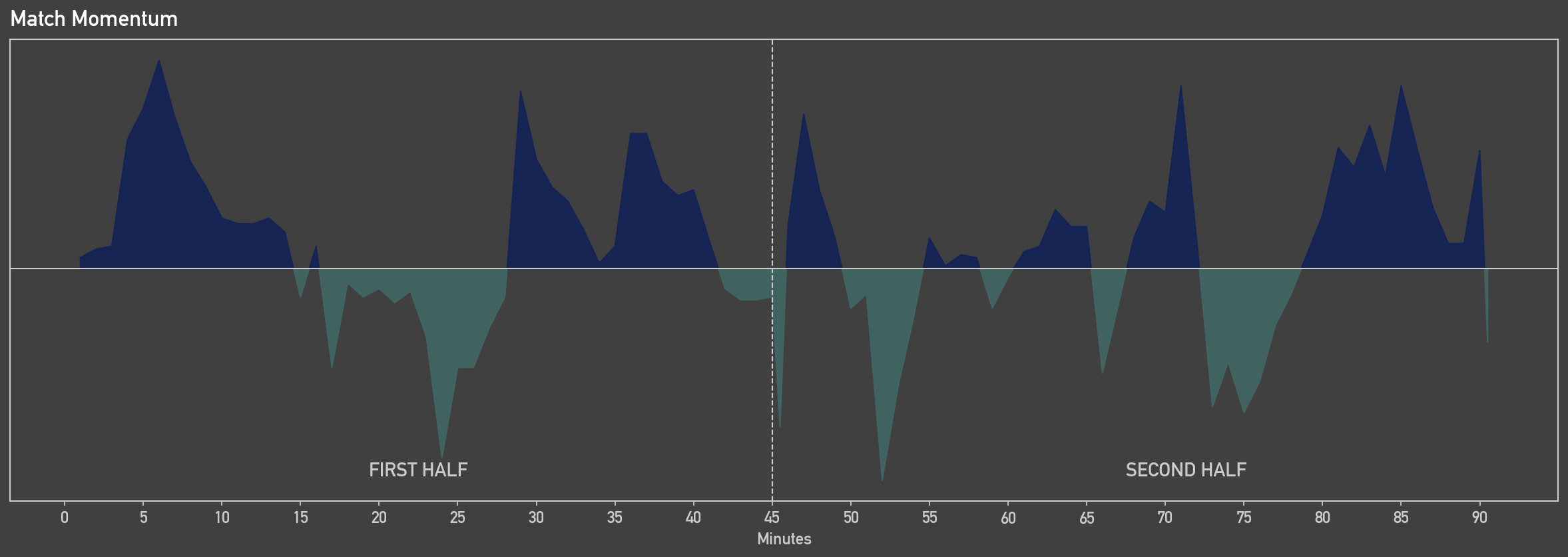
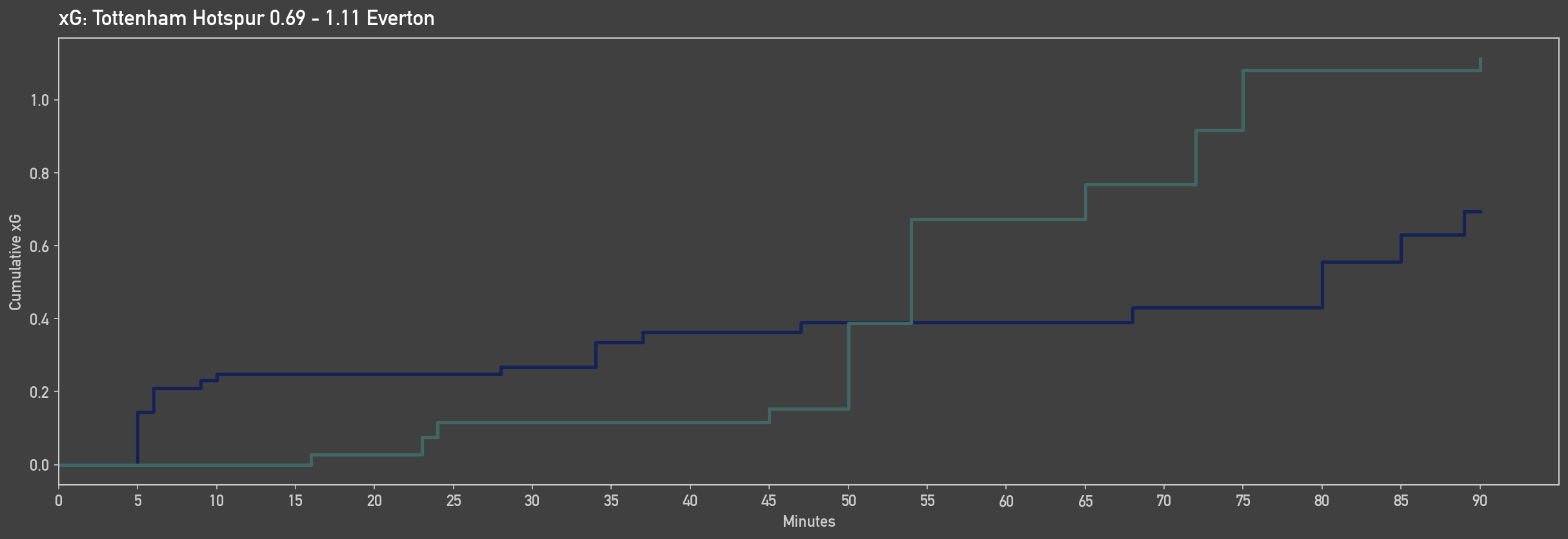
Despite a promising opening 15 minutes, the wait for a goal continues, as another lackluster attacking performance now means Spurs have gone the opening four games of a season without scoring for the first time in their history. Spurs enjoyed 62% of possession, the majority of which felt safe and uninventive, but 39 touches in the Everton penalty areas demonstrates that Spurs were able to access dangerous areas. However, once in these areas, a lack of attacking cohesion and poor decison making, lead to just two speculative shots on target all game.
Out of Possession
In a slight variation to last week's match, Spurs set up in a 4-4-2 block (Image 1) with Mateus Fernandes joining Dominic Solanke in the forward line. With James Garner dropping inbetween the Everton centre-backs to dictate play, and their fullbacks pushing high and wide, Everton's build up resembled a 3-4-3 shape. The midfield four of Spurs was rather compact, forcing Everton around the sides and importantly forcing the key creative outlet, Dewsbury-Hall, to come deep to recieve the ball, limiting his impact in danegrous areas.
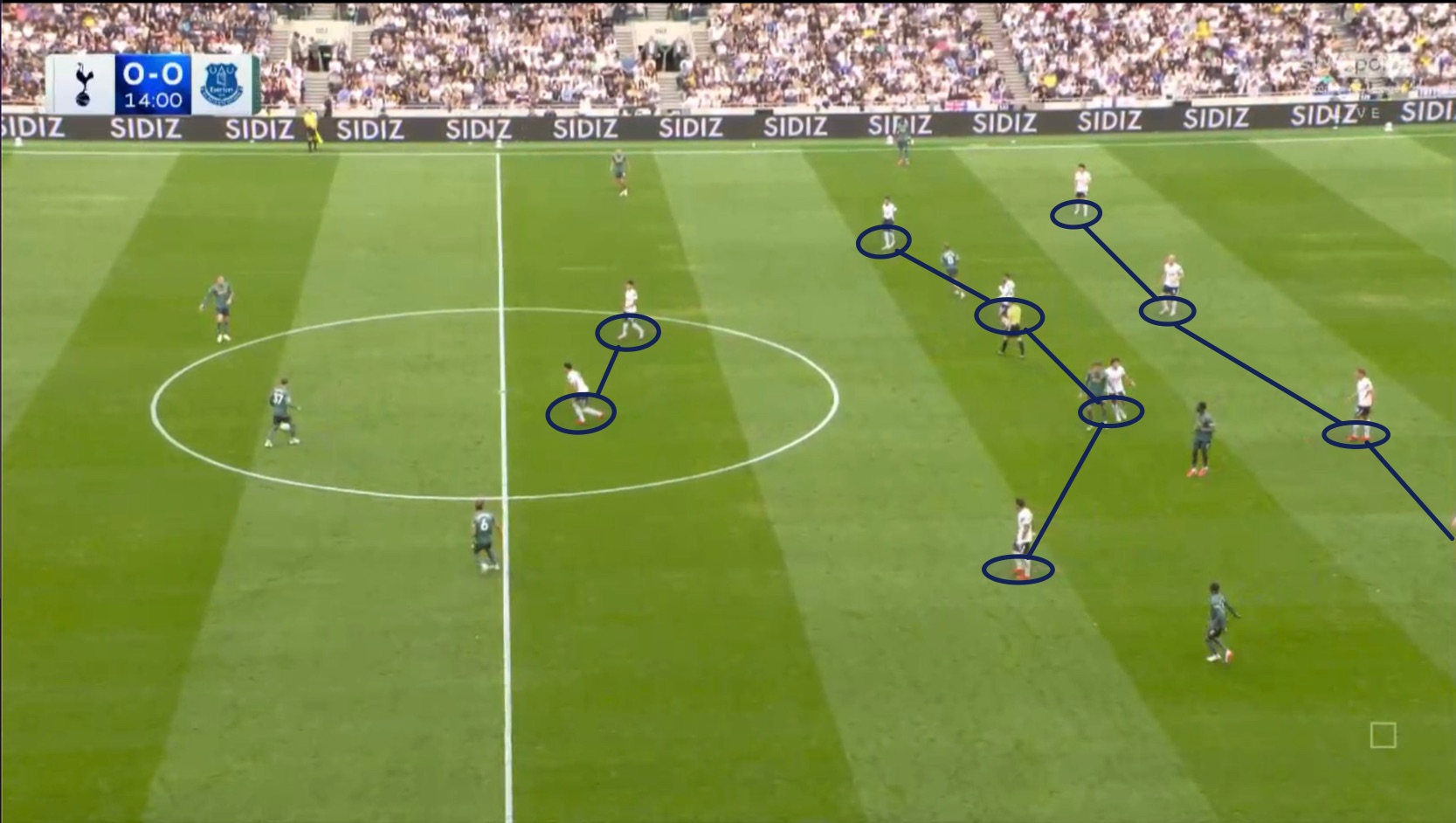
Image 1: Spurs' 4-4-2 shape out of possession.
Spurs also implemented a rather aggressive counter-press in the first half. They won the ball back in the final third on numerous ocasions allowing them greater control over the game and limiting Everton's counter-attacking opportunities. This approach was especially effective in the first 15 minutes but as the energy faded further into the game, they were more eager to regain their shape in transition. This may be evidence of the poor physical condition De Zerbi has been consistently referencing in his post match interviews.
Overall, Spurs dealt with the Everton arial threat from set-pieces effectively and limited them to just two shots on target, one of which came from a Kinsky error while attempting to play out from the back. While an xG conceeded of 1.11 may suggest Spurs were fortunate to come away with a second successive clean sheet, I would argue it was deserved, with impressive performances once again from the Dutch duo of Van de Ven and Van Hecke.
In Possession
Spurs' set up in possession was slightly different to last week at Forest, reverting to De Zerbi's favoured "box" system. A 3-2-5 shape which saw a double-pivot of Tonali and Bentancur, with Robertson providing the width on the left, Marmoush in the left half-space and Fernades in the right half space. Once again, the aim seemed to be to progress the ball through central areas, allowing creative players to operate in the half-spaces, but just as at Forst last weekend, it was stifeled by Everton's approach.
Everton set up in a 4-1-4-1 with James Garner playing an interesting role. The Everton centre-backs were very narrow, while left-back Mykolenko tightly marked a touchline-hugging Savio. This created a huge gap in the right-half space which Spurs looked to exploit early in the game. Mateus Fernandes was taking up positions in this space but was being constantly shadowed by Garner, possibly a direct instruction from Moyes. This might demonstrate that De Zerbi's patterns of play to exploit these areas are too obvious and that Premier League managers are deliberately setting their teams up to nullify this threat.
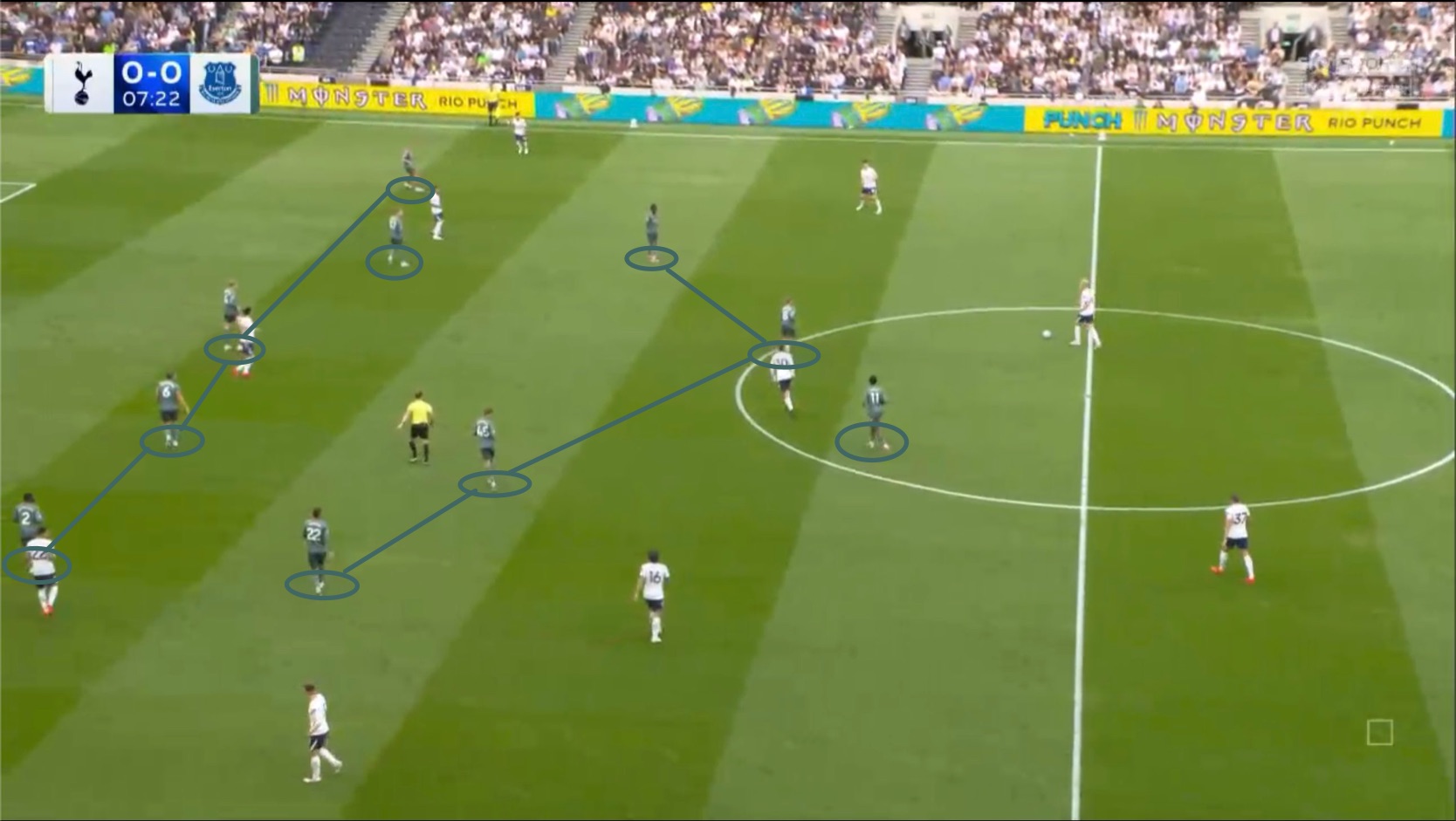
Image 2: Everton's 4-1-4-1 shape out of possession with Garner man-marking Fernandes. Also an example of Spurs' 3-2-5 shape in build-up.
Spurs were attempted to exploit this Everton shape early on due to clever rotations between Fernandes and Gray and the fantastic passing ability of Van Hecke. In Image 3, Van Hecke is able to find Fernandes in the right half space after losing his marker but unfortunately was not ablet to convert this promising position into a shooting chance. In Image 4, clever movement from Fernandes, closely followed by Garner, while Savio drags Mykolenko wide, creates a channel for Archie Gray to exploit. This pattern occured multiple times but a lack of penetration on the ball from Tonali and Bentancur meant Spurs were not able to capitalise.
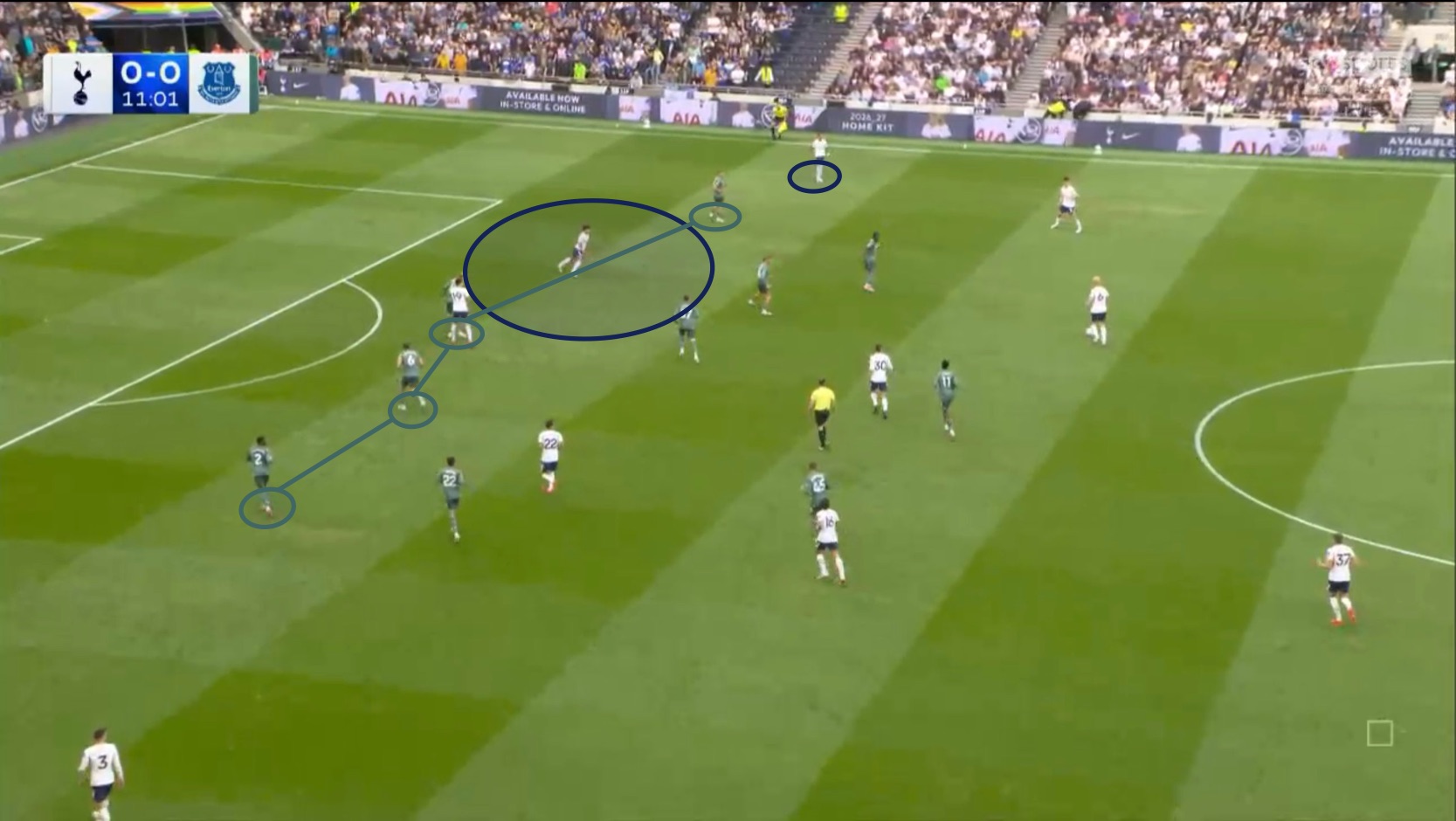
Image 3: Fernandes finds a pocket in the right half space after losing Garner and Van Hecke is able to break the lines.
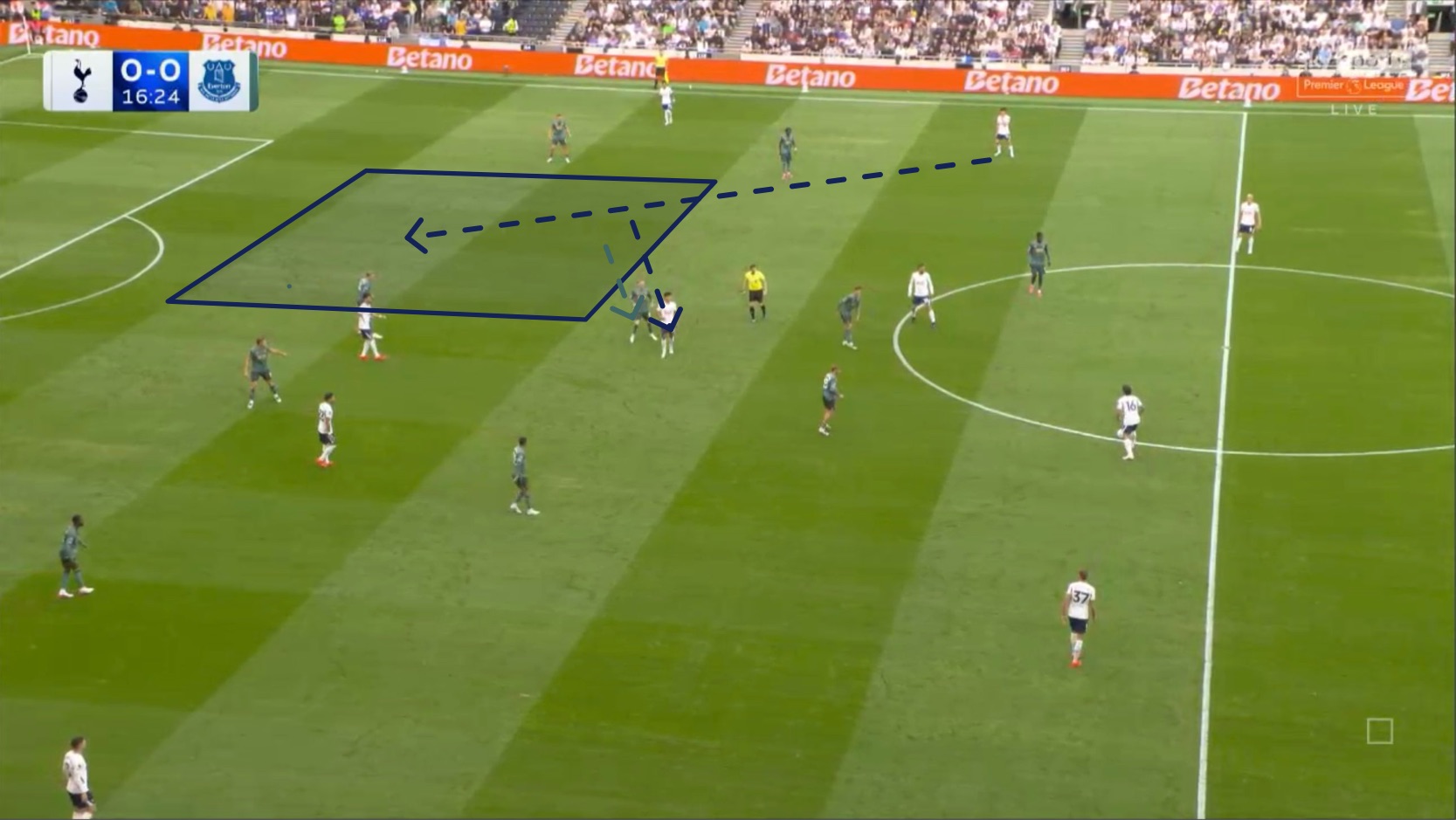
Image 4: Fernandes drags Garner into a central area, leaving space in the right half space for Gray to exploit.
Everton sat in a very low block (16.1 OPPDA), allowing Spurs to have 62% of possession, which I think this is further evidence of Moyes setting his team up to disrupt De Zerbi's prefered style of play. During his time at Brighton De Zerbi was famed for "baiting the press" to create artificial transitions and exploiting space in-behind the opposition. Moyes, astute to this pattern, allowed his Everton team to sit deep conceeding possession to Spurs, effectively challenging them to break them down. Spurs did successfully do this on few ocasions as previously discussed but failed to carve out genuine opportunities, generating just 0.52 open play xG. One reason for this is slow possession and a failure to consistently penetrate Everton with the likes of Tonali seemingly shrugging off responsibility to progress the ball and choosing safe passing options. But I think the general lack of attacking cohesion is evident as new signings and players returning from injury are trying to understand a new system under a still relatively new manager. So it is unsurprising that Spurs are struggling in front of goal but I think there are positives to take from this weekends game.
Analysis
One statisitc which stood out was that Spurs recorded 39 touches in the Everton's box without registering a single shot on target from within the box. This reaffirms that Spurs are able to progress the ball reasonably effectively but due to the reasons previously discussed are currently struggling to convert these situations into attempts on goal.
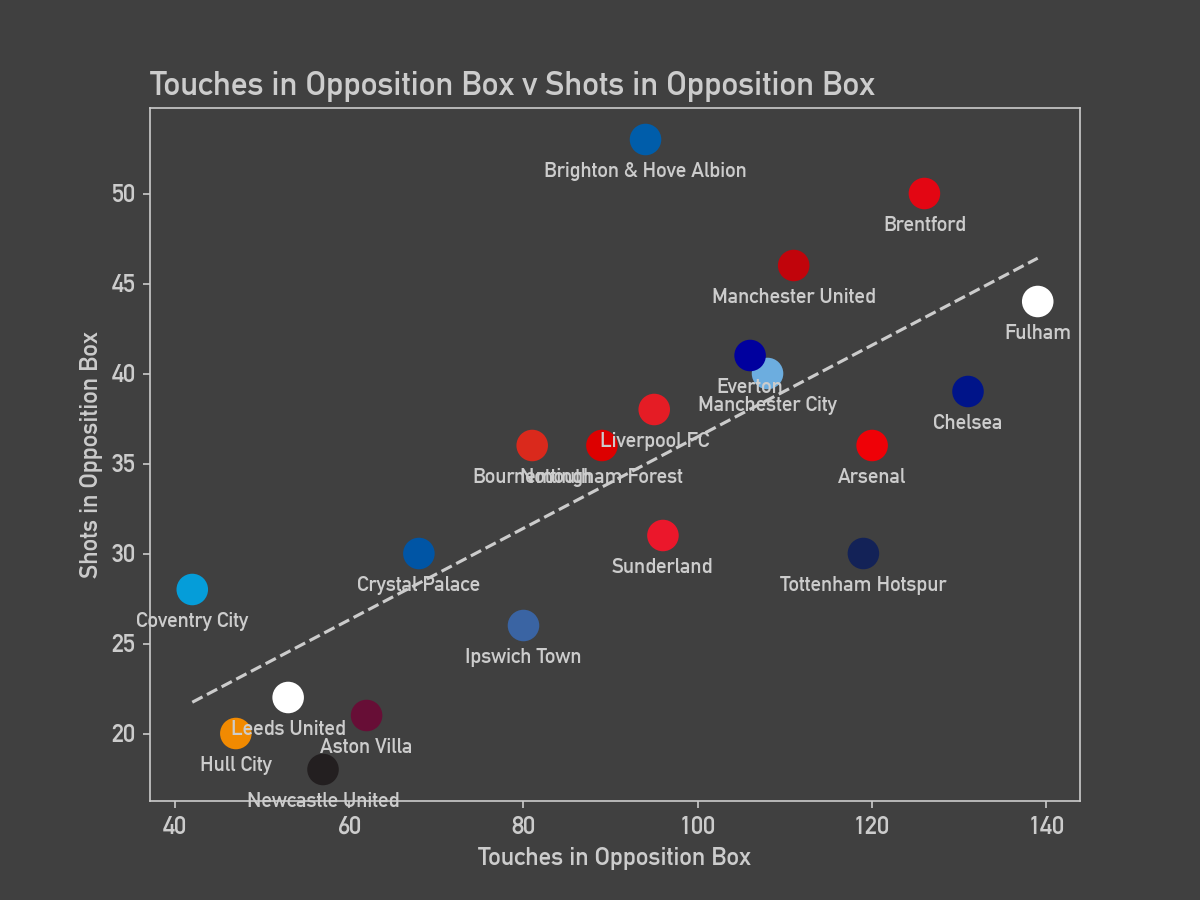
Figure 1: A plot of touches in the opposition box against shots in the opposition box for all Premier League teams so far this season, fitted with a linear regression.
Figrue 1 shows the realtionship between tocuhes in the opposition's box against shots in the opposition's box for all Premier League teams so far this season. There is a very strong statistical evidence of a positive relationship between these two variables (r = 0.743, p = 0.0002). This is intuative, as teams who records more touches in their opposition's box would be expected to produce more shots. 52.2% of the variation in shots in the opposition's box is explained by the linear relationship with touches in the opposition's box (R^2 = 0.522). Spurs are positioned significantly below the regression line, recording just 30 shots in the opposition's box compared with 41.3 shots expected by the league-wide regression relationship. This represents a 27.4% underperformance, the largest in the league, and demonstrates an inefficiency in attacking output.
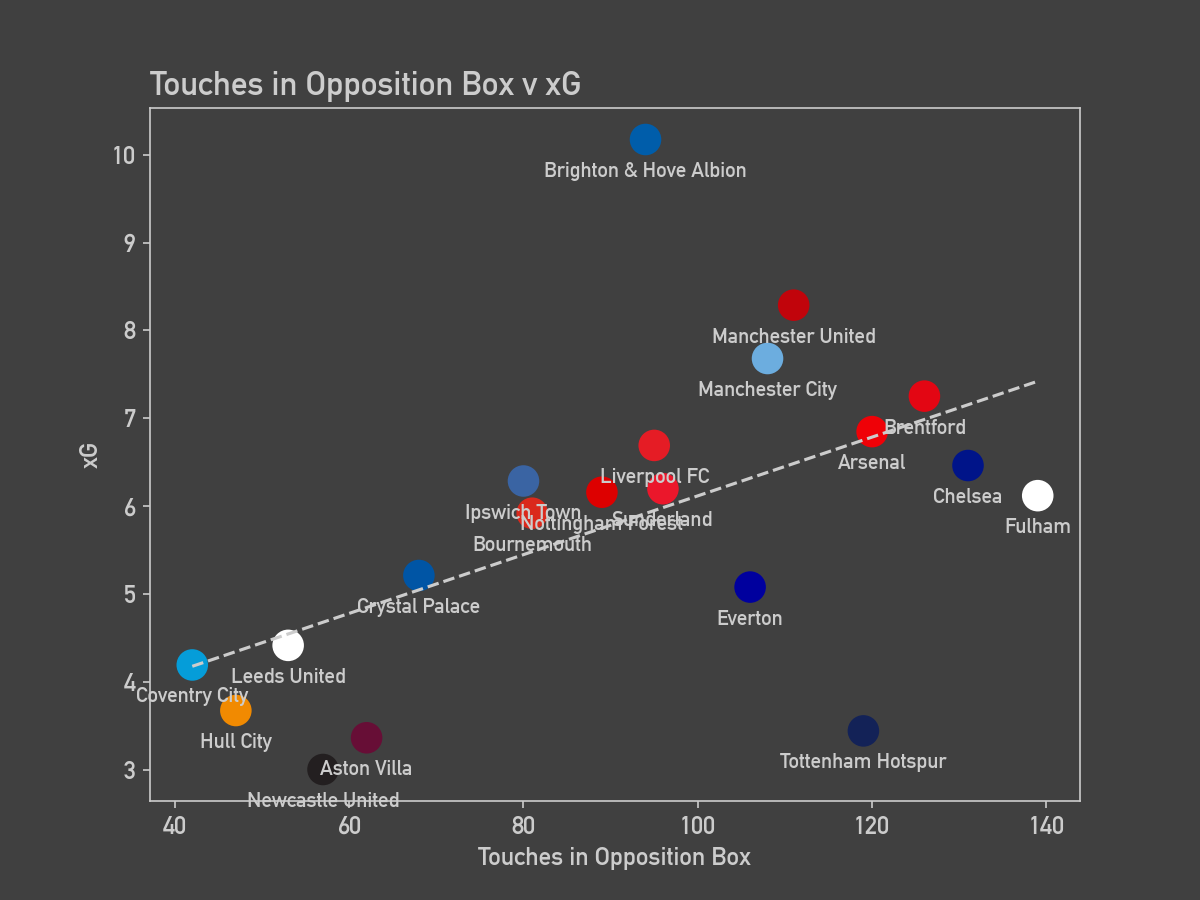
Figure 2: A plot of touches in the opposition box against total xG created for all Premier League teams so far this season, fitted with a linear regression.
Figure 2 shows similarly shows a positive relationship between touches in the opposition's box and expected goals, although weaker then the relationship in Figure 2 (r = 0.537, p = 0.01). The R^2 value of 0.288 indicates only 28.8% of the variation in xG is explained by the linear relationship with opposition-box touches. This suggests that while touches in the opposition's box are strongly associated with shot volume, the resulting quality of these opportunities is less strongly related. Once again, Spurs are positioned below the regression line. Given their 119 touches in opposing penalty areas, the regression predicts 6.75 xG created, but Spurs have only created 3.44 xG. This represents an underperformance of 49.0%, once again the largest underperformance in the league, demonstrating Spurs' inability to carve out quality goal-scoring opportunites from advanced positions.
The question therefore, is what is causing this significant underperformance? With three new attacking players in the front four against Everton, (Marmoush, Savio and Fernandes), it may take time for these players to settle into De Zerbi's system and establish relationships with the existing squad. There have been clear examples of misunderstandings between players in attacking areas, notably Savio's misunderstanding of Gray's overlapping run in the second half, leading to an Everton goalkick. On top of this players like Maddison, Solanke and Kudus may still be lacking match sharpness as they return from long-term injuries. This combination of new attacking players, returning players and a new manager who has only taken charge of 12 matches provides an unsatisfactory but plausible explanation for the current lack of attacking cohesion.
It is important to recognise that the relationships identified in this analysis do not establish causation. A team's overall attacking quality, tactical approach, possession structure and other factors may influence both their number of touches in the opposition's box and their shot and xG output. However, the strength of the relationships provides useful evidence that opposition-box touches are strongly associated with attacking output. Spurs' position below both regression lines therefore suggests that their current problem is not simply a lack of access to the opposition's box, but an inability to effectively convert that access into shots and, ultimately, high-quality scoring opportunities.