Tottenham Hotspur 2 - 0 Crystal Palace
PREMIER LEAGUE | GW9 | 31.10.2026
Overview
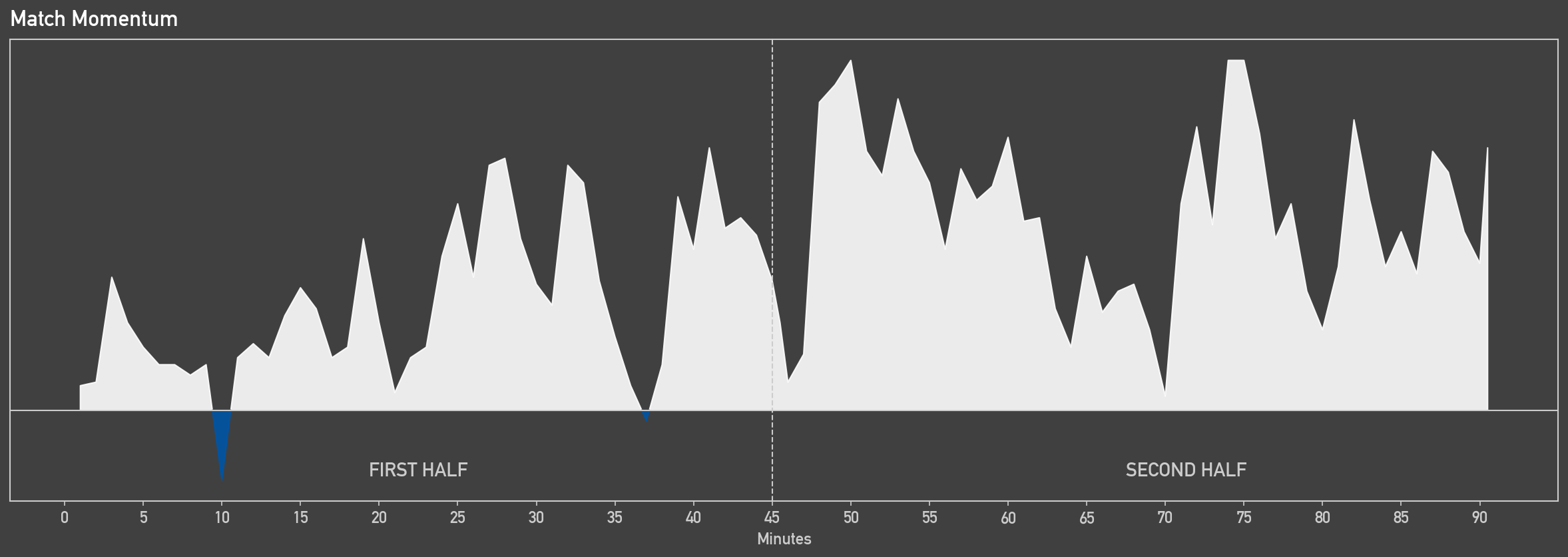
Spurs put on a dominant display against a 10-man Crystal Palace, securing a third consecutive league win for the first time since February 2025. Mateta's dismissal in the 13th minute led to a largely one-sided affair, with Archie Gray putting Spurs ahead before Jan Paul van Hecke doubled their lead midway through the second half. Regardless of the circumstances, it was an important victory for Spurs, moving them up to ninth in the table.
From a tactical perspective, the game was fundamentally altered by Mateta's red card, which saw Crystal Palace retreat into a deep 5-3-1 low block (15.1 OPPDA), conceding 79% of possession to Spurs. De Zerbi was quick to react, seemingly instructing Archie Gray to adopt a higher position in the 15th minute. This was despite Gray beginning the match as part of a back three, in a similar diamond midfield sysetm that Spurs had used against Coventry. With a numerical advantage, Gray was able to push higher up the pitch, helping to create overloads in wide areas, while build-up initiated from a back two of van Hecke and van de Ven.
One of the most impressive aspects of Spurs' performance was the effectiveness of their counter-pressing. Their numerical advantage allowed them to commit more players higher up the pitch, with limited threat of a Palace counter-attack. This helped to compress the space available to Palace when they regained possession. With few available outlets to progress the ball and Spurs well positioned to counter-press, they were able to recover possession quickly. This was a key factor in their dominance and control of the game, reflected in their extraordinary field tilt of 94.3%.
But the most exciting moment of the match came in the 88th minute, when 18-year-old Luca Williams-Barnett came on to make his Premier League debut. Williams-Barnett is a name many Spurs fans will already be familiar with, having established himself as one of the most promising prospects to emerge from the academy in recent years. He spent last season with the U21s, scoring six goals and providing five assists in just ten Premier League 2 appearances, earning his promotion to the first team at the beginning of this season. His mazy dribble past three defenders, before putting the ball on a plate for Kudus, offered a glimpse of the excitement he could bring to the first team. It was a fitting way to mark his debut and an encouraging sign of the talent emerging from Spurs' academy.
De Zerbi's Half-Time Change
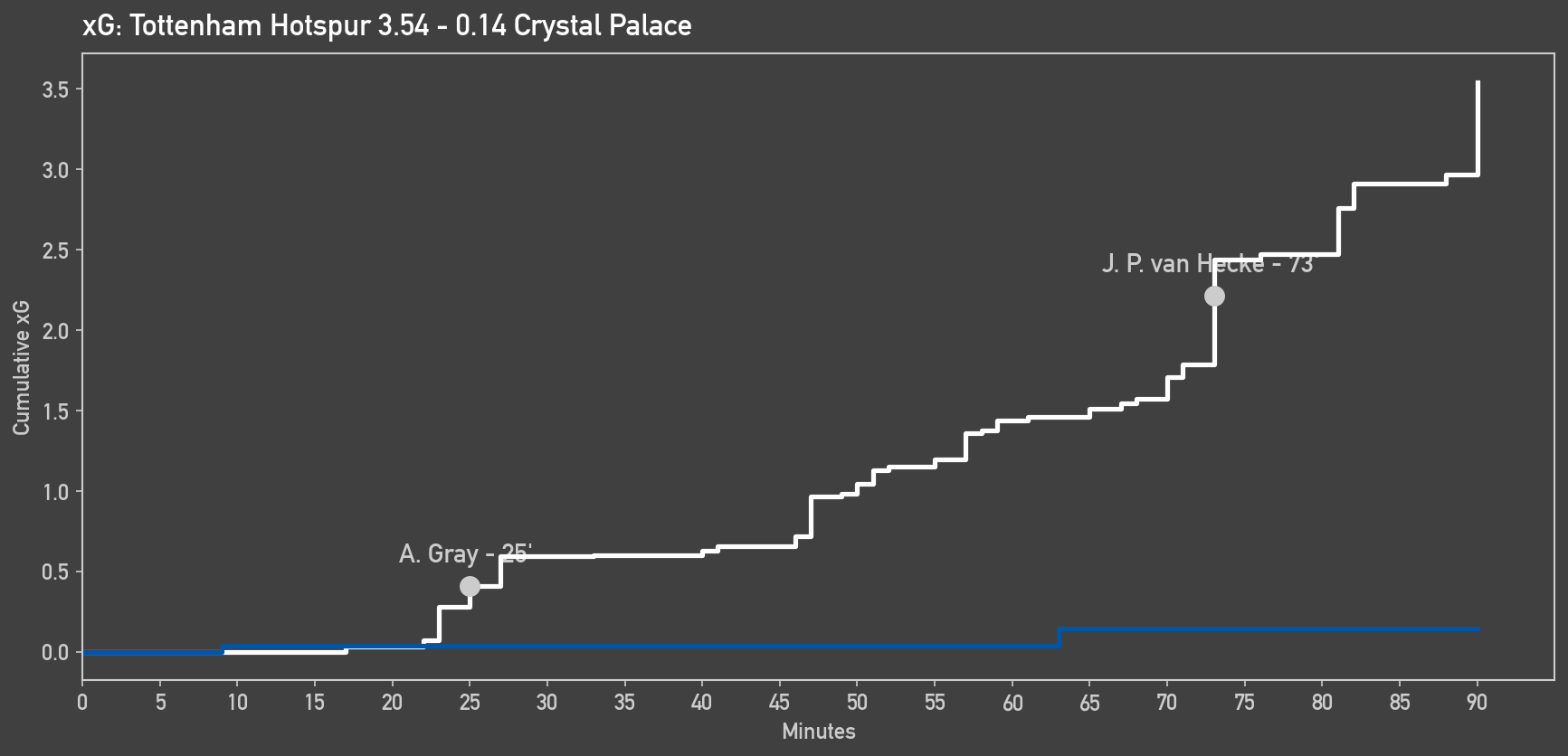
While the game felt as though it was only ever going in one direction following Mateta's dismissal, I think De Zerbi made one particularly important tactical decision that helped Spurs become more effective in possession. In the first half, Spurs created just 0.66 xG, with their breakthrough coming from an Archie Gray header. Despite scoring, Gray was substituted at half-time for Pedro Porro, and I think Figures 1 and 2 help explain the tactical reasoning behind this change. De Zerbi later explained that Gray's yellow card was the reason for the substitution, but I think the change also offered Spurs an important tactical advantage.
Gray has developed an ability at right-back to make penetrating underlapping runs, disrupting the opposition's defensive structure and exploiting space in behind. However, this movement is most effective when there is space to attack, something that was largely unavailable against Palace's deep defensive block following the red card. Furthermore, while Gray is an effective ball carrier and possesses good positional awareness, his passing is not necessarily his strongest attribute when it comes to unlocking a compact defence. He recorded -0.003 xT from passing in the first half, suggesting limited threat through his distribution. De Zerbi may therefore have recognised that Gray's influence on the game was likely to be limited under the circumstances.
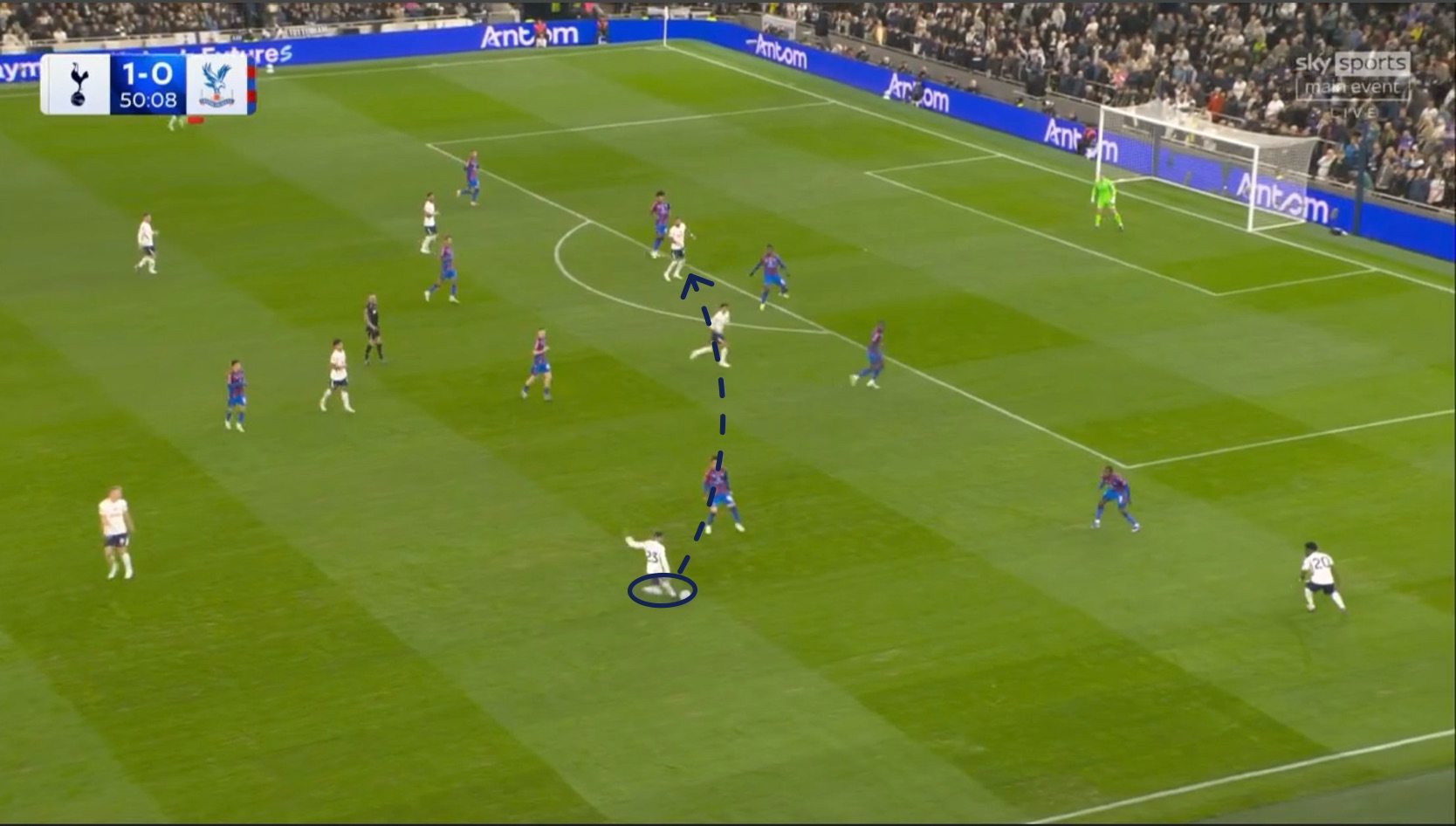
Image 1: Pedro Porro's passing ability, allows him to play direct into the feet of Solanke, greating a goal scoring opportunity for Spurs.
By contrast, Pedro Porro offered a different dimension. One of the league's most accomplished passers, his ability to pick out progressive passes and deliver the ball into dangerous areas was particularly valuable against a side defending so deep. He demonstrated this quality in the second half, contributing 0.177 xT from passing. For example, Figure 1 shows an excellent pass into Solanke's feet, creating a shooting opportunity worth 0.09 xG. Passes into the area from this right half-space are something Porro specialises in, and a key tool for breaking down low-blocks.
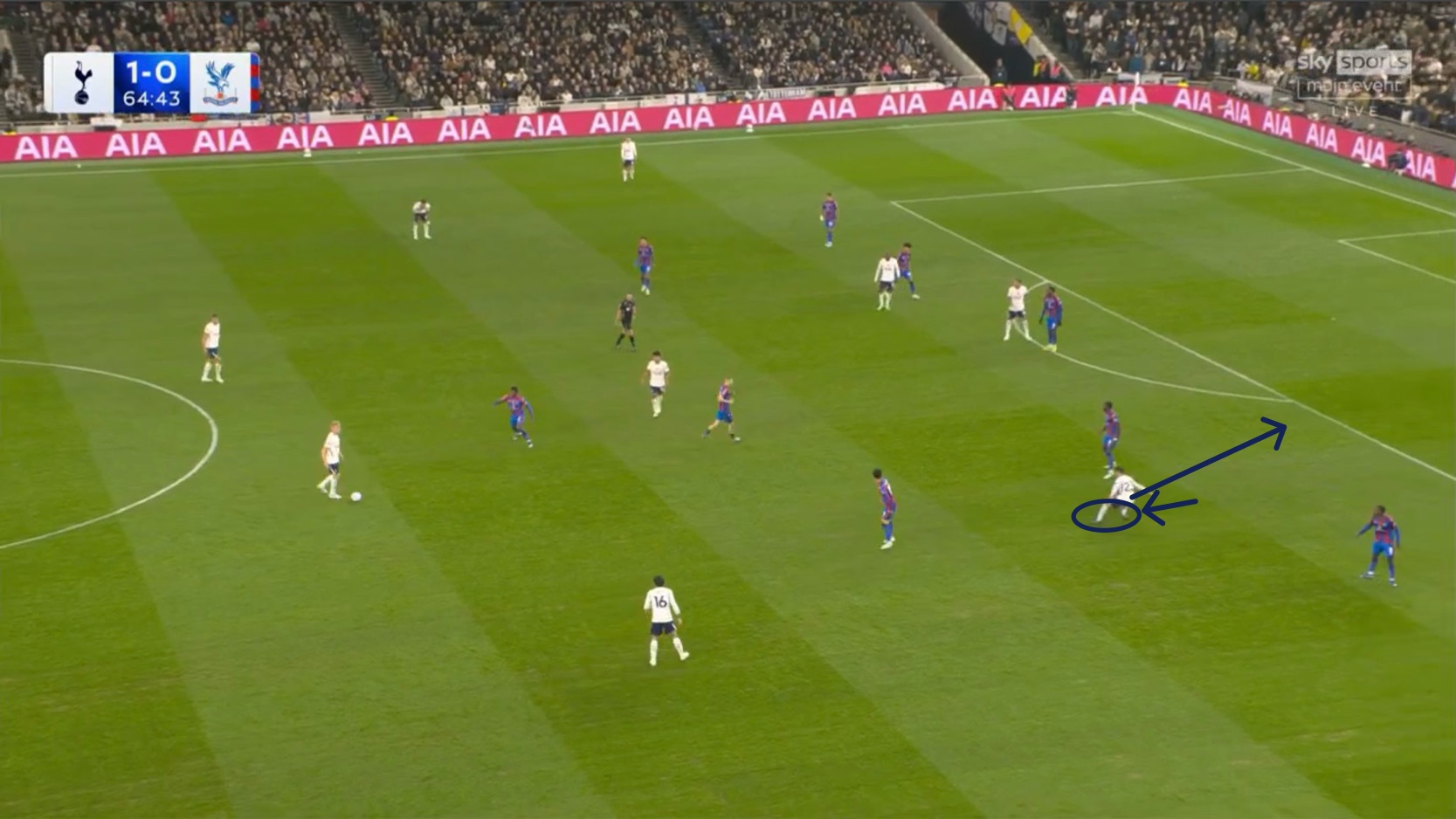
Image 2: Pedro Porro's movement to exploit space behind Palace's defensive line.
However, Porro's contribution wasn't limited to his distribution. His spatial awareness and ability to manipulate defenders through movement also proved valuable. While Gray has shown improvements in this area, Porro is particularly effective at identifying and exploiting spaces between defensive lines. This is demonstrated in Figure 2, where he initially positions himself in the right half-space before making a double movement. This draws Canvot out of position, allowing Porro to subsequently run in behind and meet van Hecke's pass, creating a shooting opportunity worth 0.05 xG.
Spurs were considerably more effective in the second half, creating 2.81 xG compared to just 0.66 in the first. While Porro was certainly not the sole reason for this improvement, his introduction provided Spurs with a different attacking dimension, better suited to exploiting Palace's deep defensive block. It was an intelligent adjustment from De Zerbi, recognising that the qualities required to break down a low block were different from those needed earlier in the game.
Final Thoughts
While this was statistically Spurs' best performance of the season so far, recording 79% possession and a net xG difference of 3.33, the circumstances following Mateta's dismissal in the 13th minute mean that too much shouldn't be read into the numbers. That being said, you can only play what's in front of you, and Spurs approached the game with confidence and control, making the most of their numerical advantage. With three consecutive wins under their belt, the squad will be feeling increasingly confident heading into their final fixture at Elland Road next weekend, before the international break.